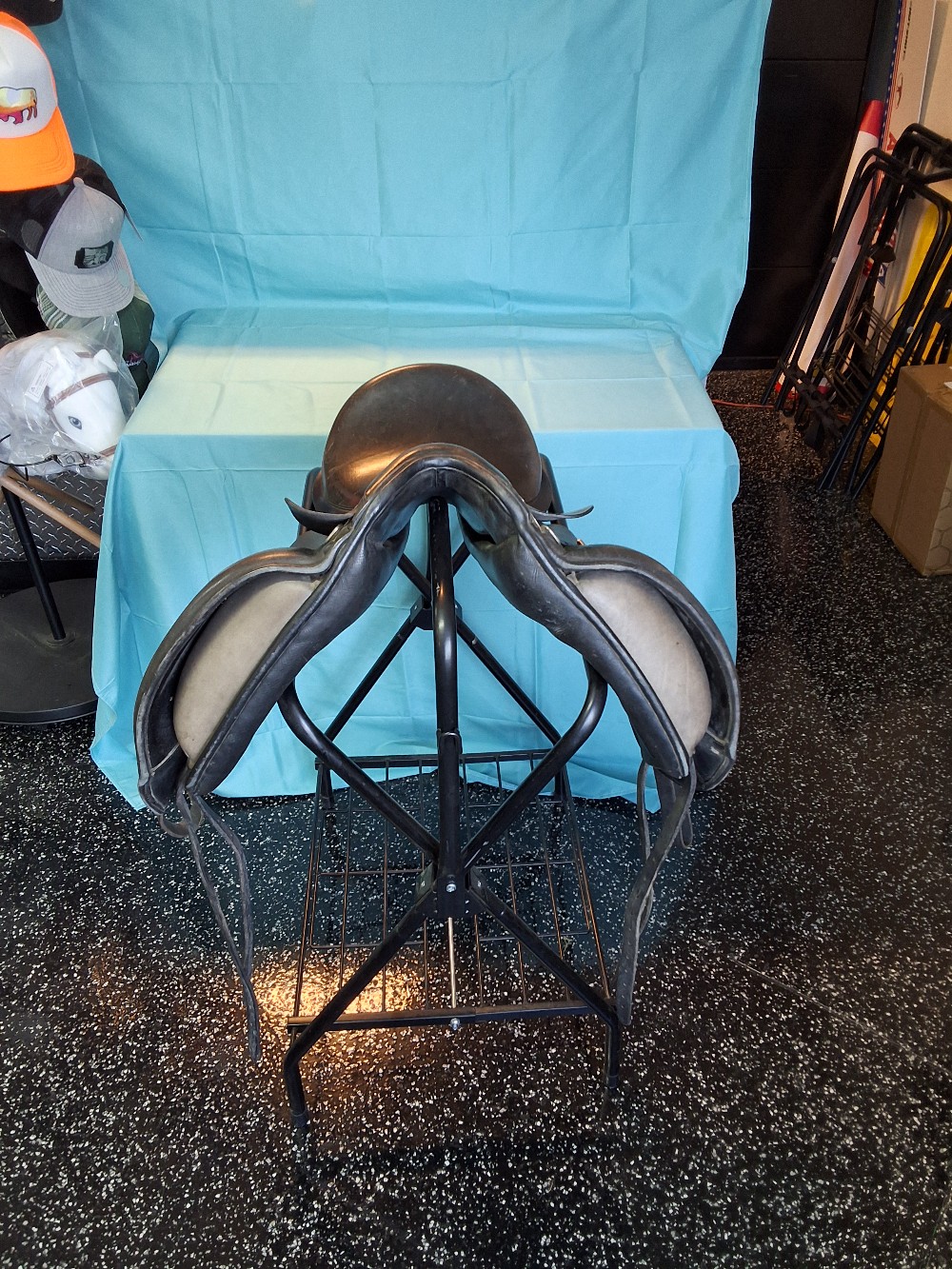
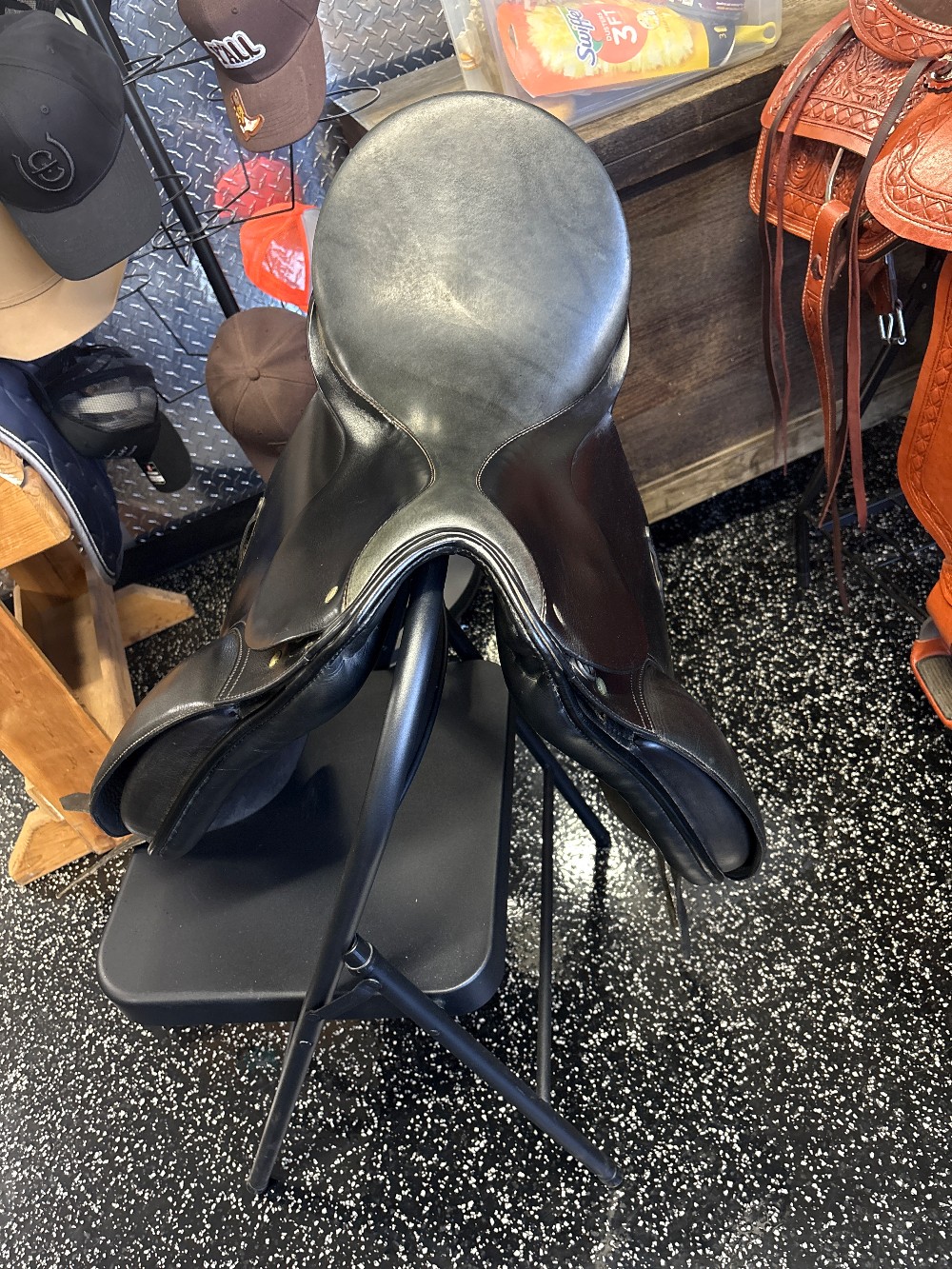
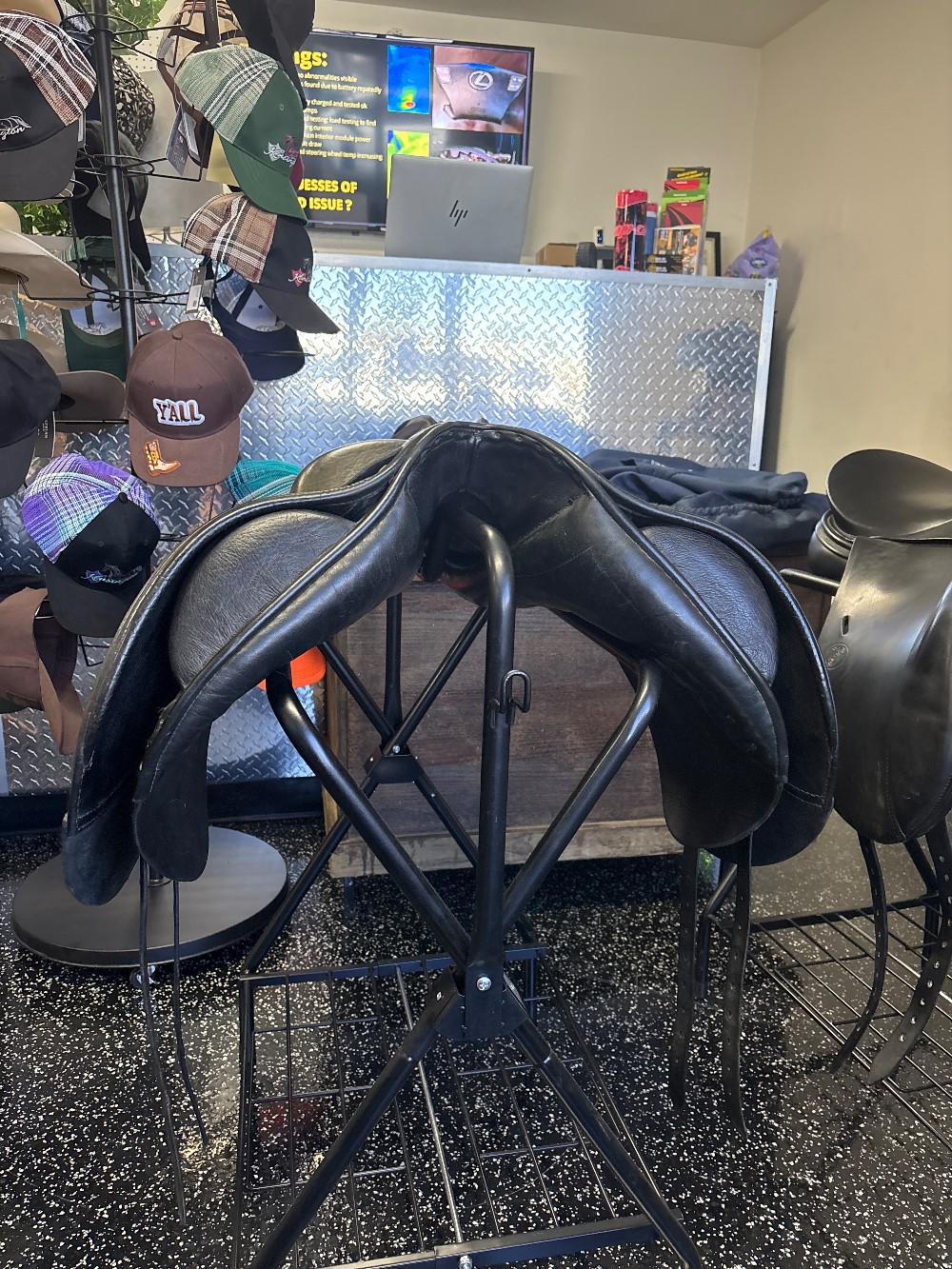
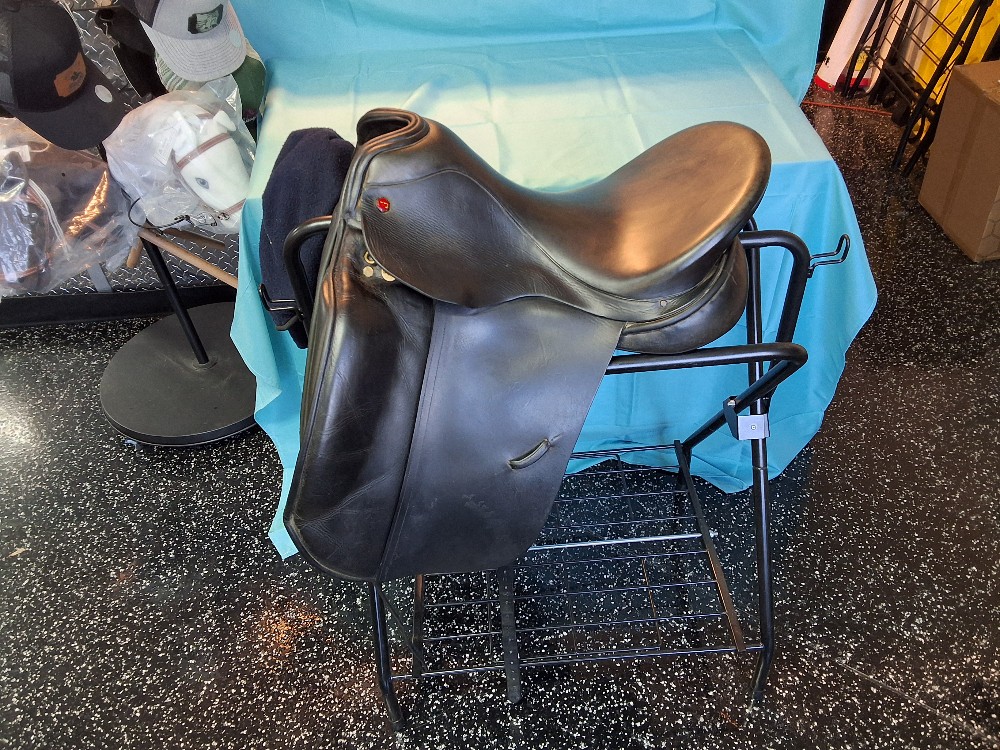
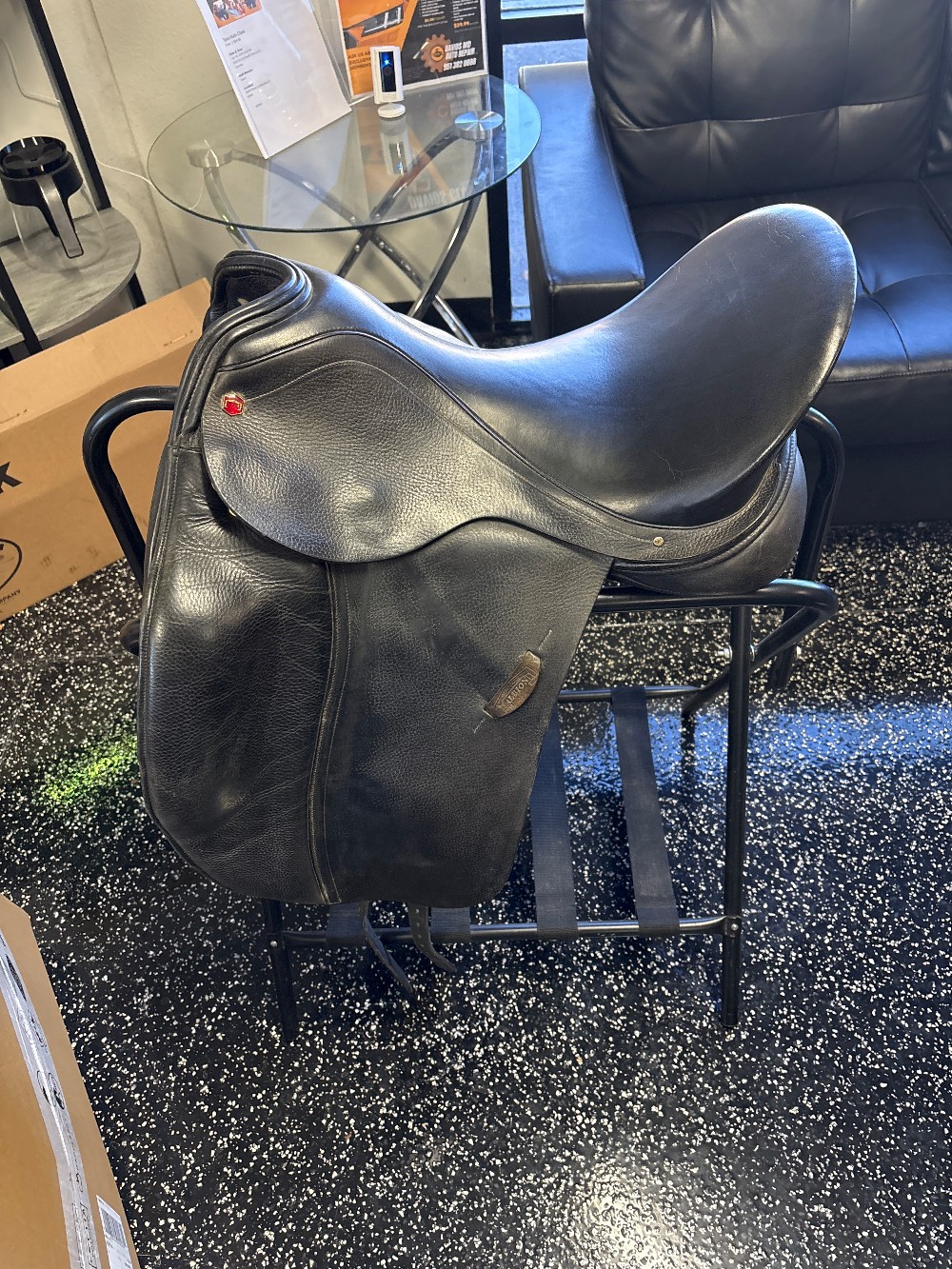
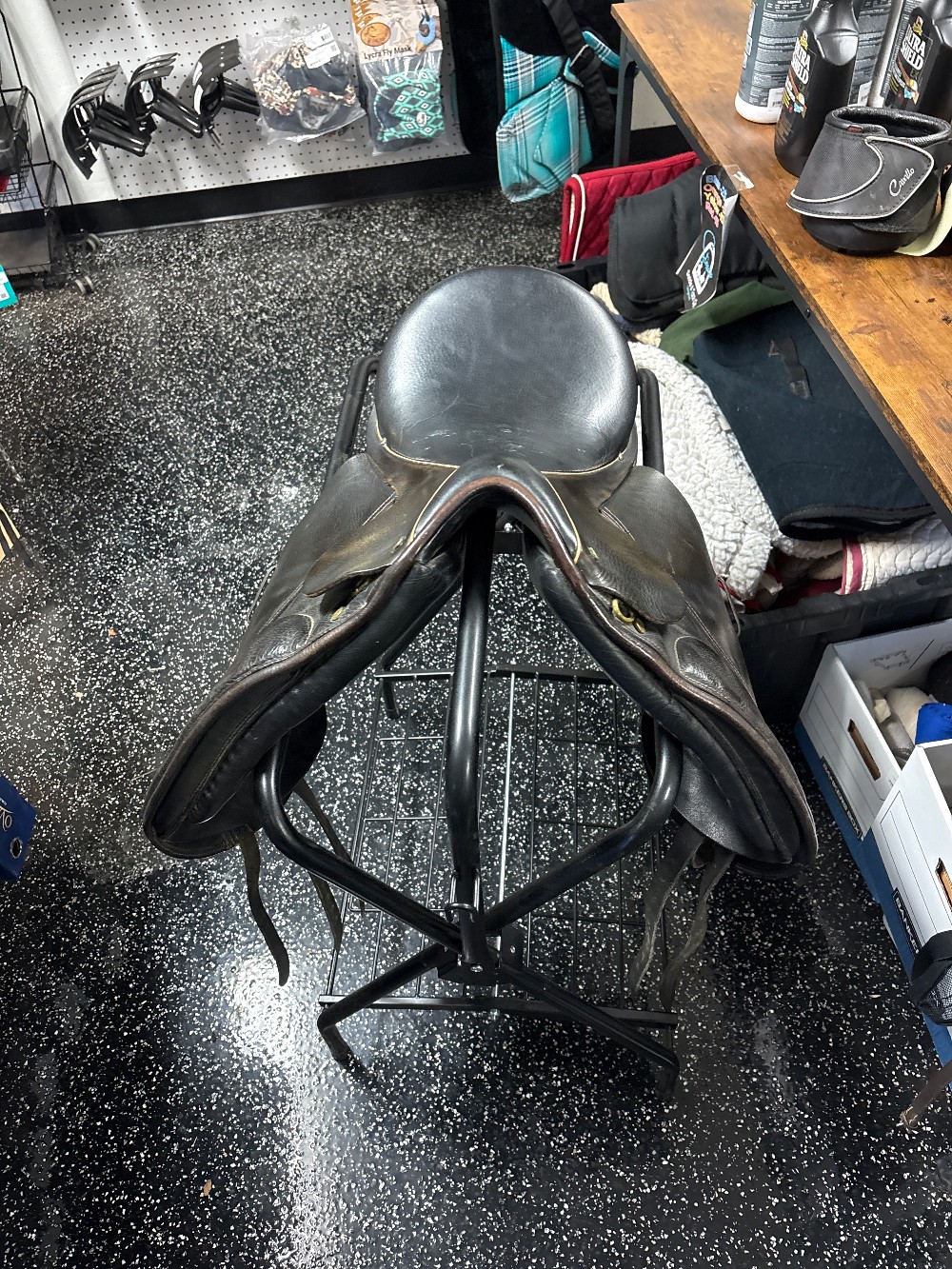
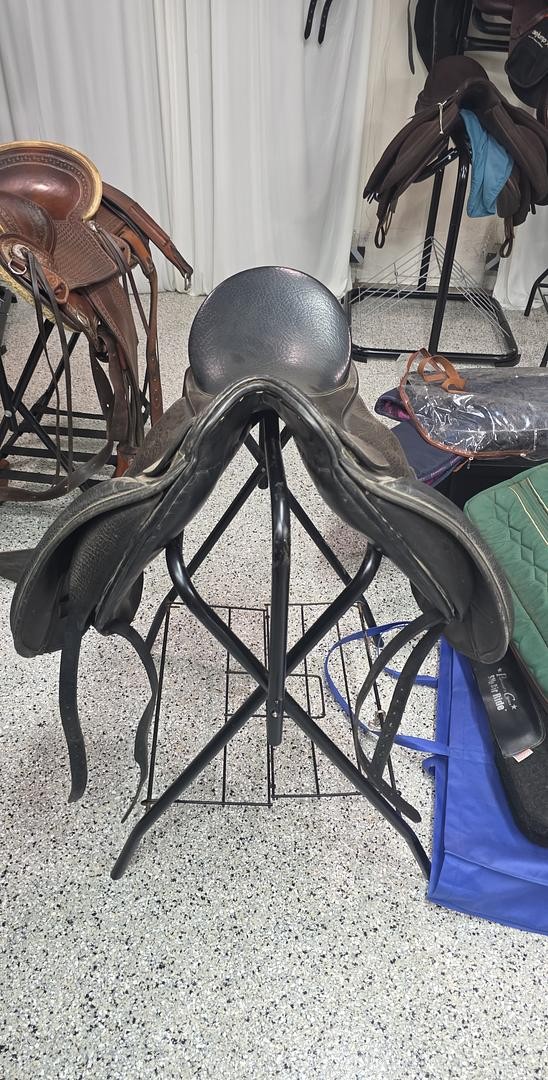
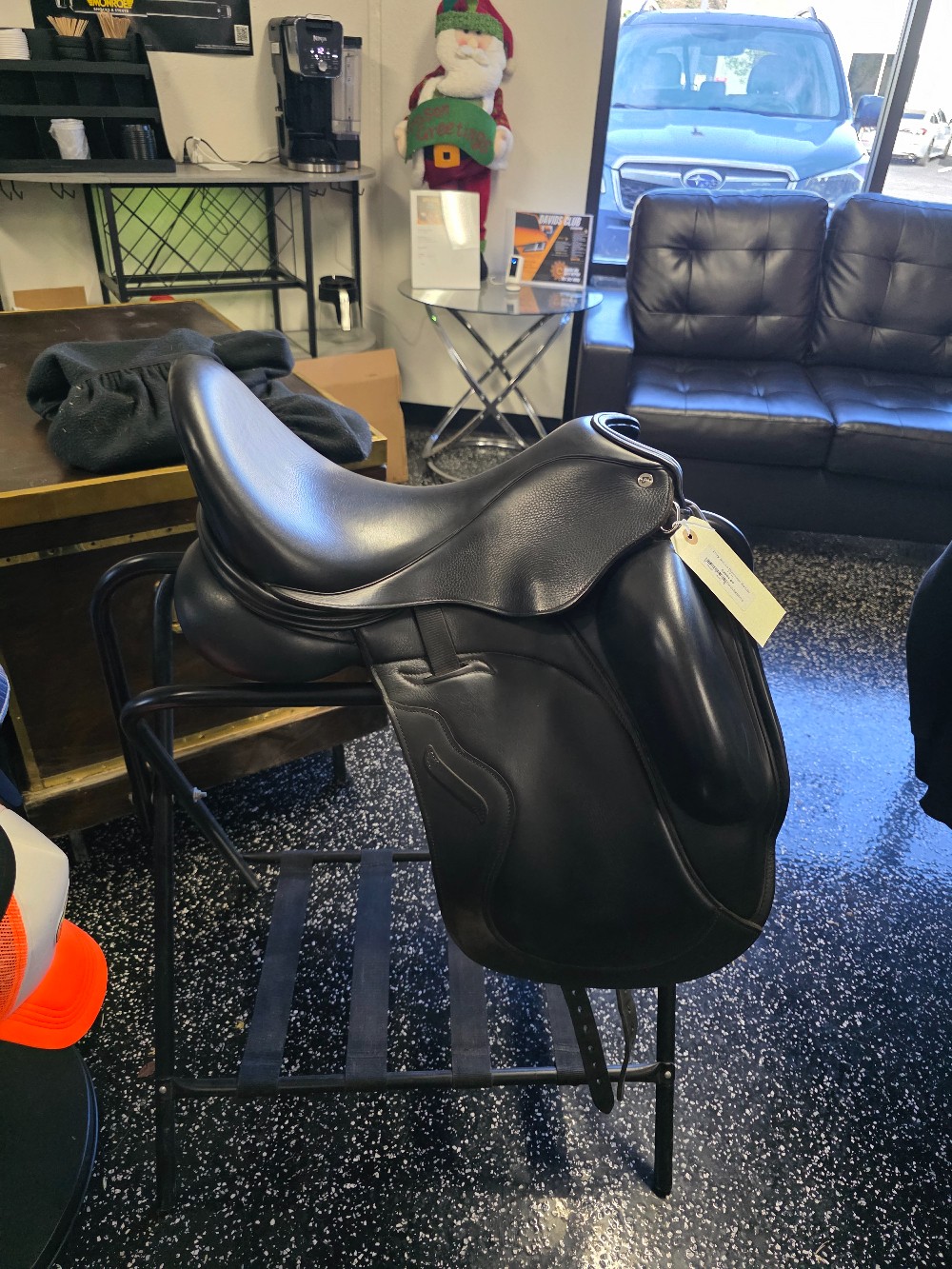
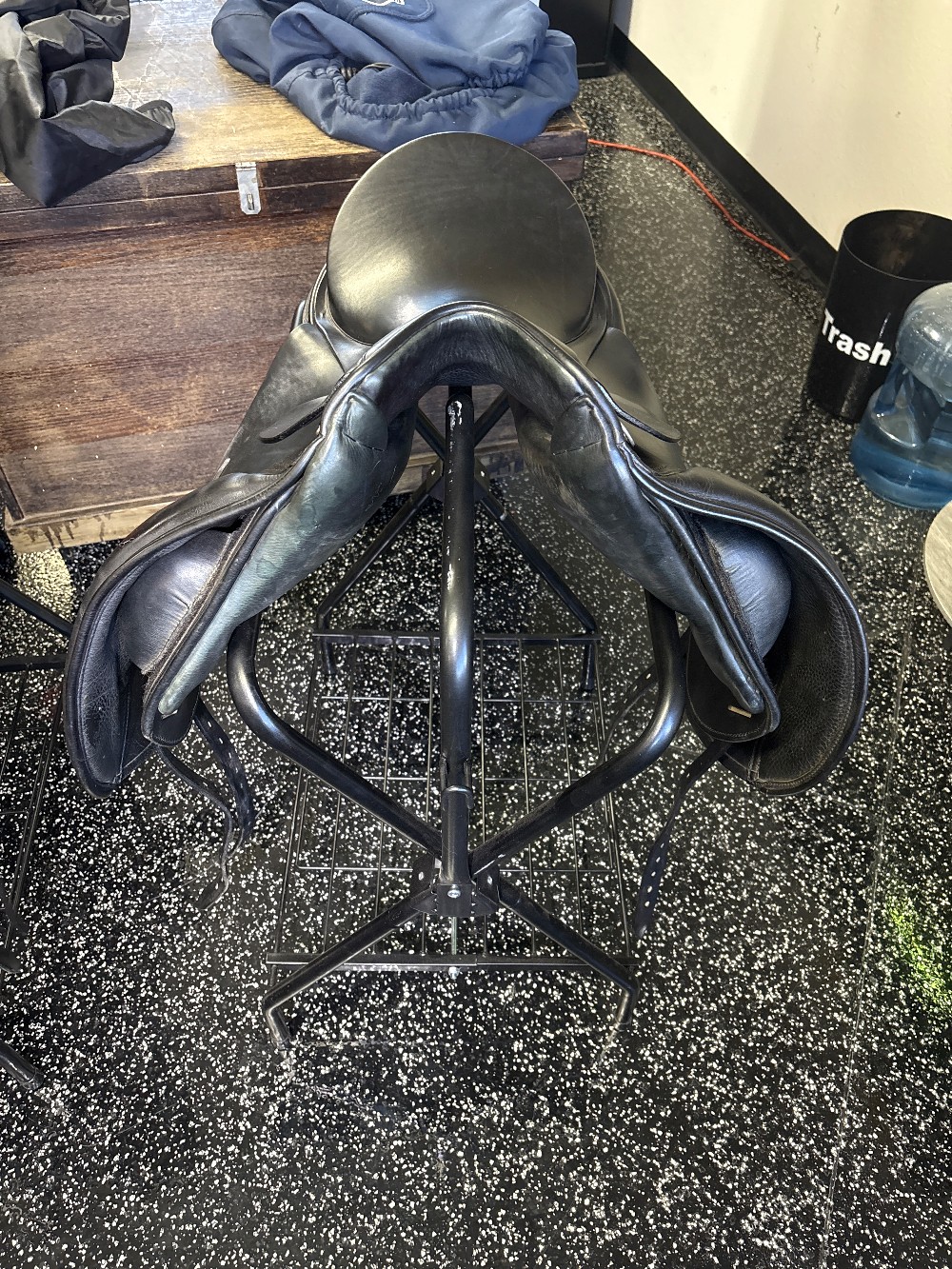
A dressage saddle is a specialized English saddle designed for the precision of dressage, featuring a deep seat, long straight flaps, and prominent knee rolls to support a long-legged, upright rider position. It enables close contact, allowing for subtle, clear communication through aids while maintaining stability and comfort for both horse and rider during complex movements. +3 Key Components and Features: Deep Seat & High Cantle: Places the rider directly in the center of the horse's back, facilitating a secure, upright, and balanced posture. Long, Straight Flaps: Designed to accommodate the long stirrup leather length required for dressage, allowing the rider’s leg to hang straight down without restriction. Knee Rolls/Blocks: Large, often adjustable, thigh and knee blocks are positioned under the flap to stabilize the leg without restricting movement. Long Girth Straps: Uses a shorter, "dressage-style" girth to avoid bulk under the rider's leg, ensuring clear, close-contact aids. Stirrup Bars: Positioned slightly further back to support the correct ear-shoulder-hip-heel alignment. Monoflap vs. Double Flap: Many modern, high-performance saddles use a single flap (monoflap) to further reduce bulk and enhance contact, while traditional models use double flaps. +5 Functionality and Design: Freedom of Movement: The straight, forward-free panel design allows the horse's shoulder to move without interference. Comfort: Panels are typically designed to maximize the surface area, reducing pressure points on the horse's back. Material: Usually made of high-quality leather (black is traditional) or synthetic materials, focusing on durability and rider comfort. +4 Dressage saddles are primarily designed for flatwork, providing a different feel than all-purpose or jumping saddles, which have shorter, more forward flaps